Key takeaways
- Most coating failures trace back to poor surface prep.
- Grinding opens the pores of the concrete so the coating can bond.
- Cracks, spalls and oil need to be fixed or removed first.
- Moisture in the slab should be tested before coating.
Test the slab
Check the slab for moisture and for old sealers or paint. A simple plastic-sheet test and a moisture meter give early clues. High moisture can cause coatings to bubble or peel.
If the slab is damp, a moisture-tolerant primer or a different floor may be the better choice.
Remove oil, paint and sealers
Oil and grease soak into concrete and must be cleaned or ground out. Old paint and sealers block adhesion and must be removed.
Degreasers help, and grinding removes the rest.
Grind the surface
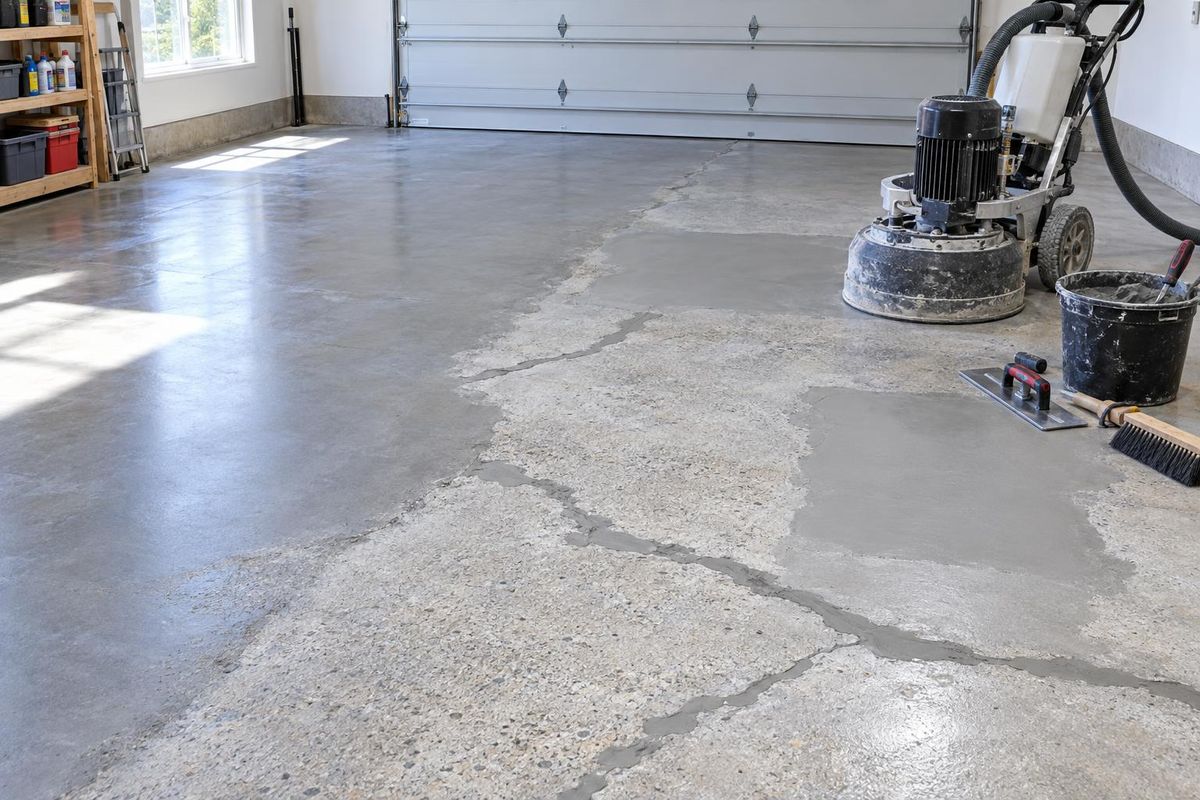
A diamond grinder scratches the surface to the right profile and removes laitance. This is much better than acid etching for a lasting bond.
Dust is vacuumed so the coating bonds to clean concrete.
Repair and clean
Fill cracks and joints, patch spalls and level low spots, then vacuum and wipe the floor. Any dust left behind weakens the bond.
Weather matters too, because temperature and humidity affect curing.
Quick answers
Can I just etch the floor with acid?
Etching is much less reliable than diamond grinding and often leaves a weaker bond.
How do I test for moisture?
Tape a plastic sheet to the floor for a day and look for condensation, or use a moisture meter.
Do I need to fill every crack?
Cracks should be filled so they do not telegraph through the coating.