Key takeaways
- Polyaspartic cures fast and does not yellow in sunlight.
- Epoxy is a proven coating with a thick, strong build.
- Many floors use an epoxy base with a polyaspartic topcoat.
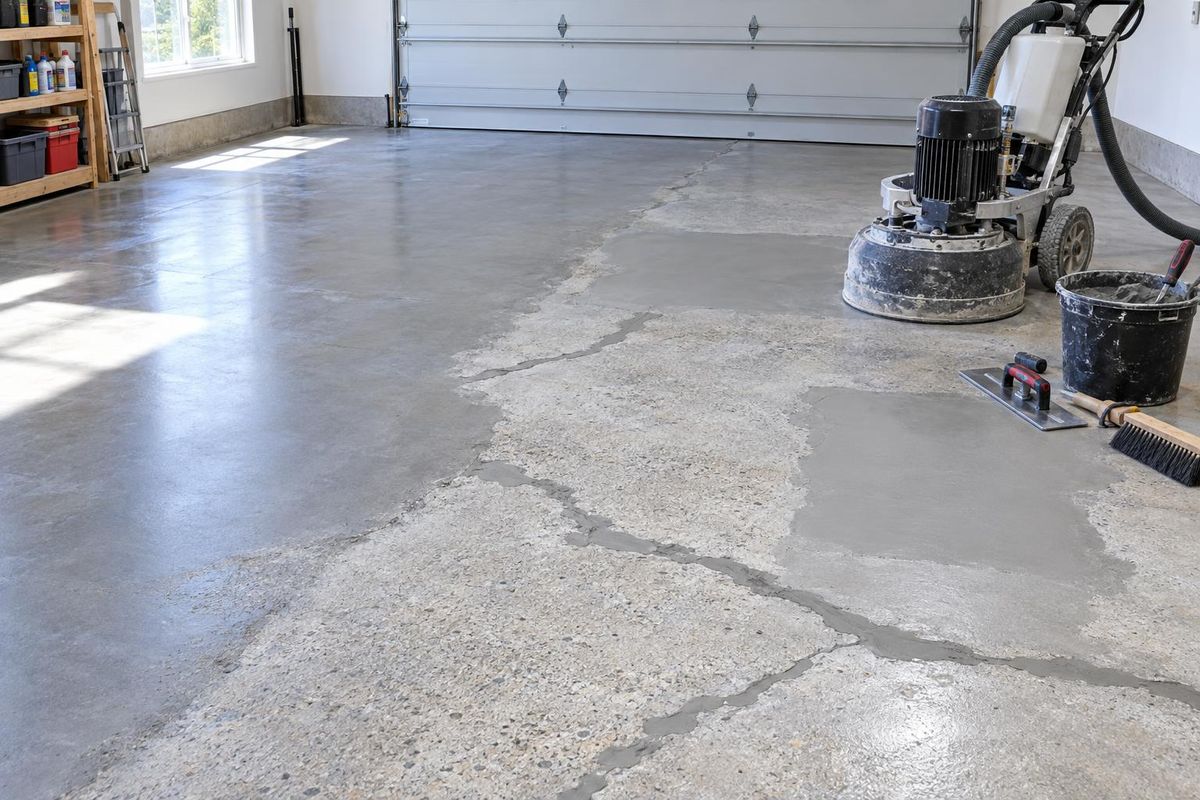
- Surface prep matters more than the product.
Cure time and turnaround
Polyaspartic cures much faster than epoxy, so a floor may be ready for foot traffic and cars sooner. Epoxy generally takes longer to cure fully.
If you need the garage back quickly, speed can be a real advantage.
Sunlight and color stability
Polyaspartic is UV-stable, so it keeps its color in sunny garages. Standard epoxy can yellow or amber in sunlight over time, which is why it is often topcoated with a UV-stable clear.
Garages with big windows or open doors benefit from UV stability.
Durability and chemical resistance
Both coatings resist oil, salt and many household chemicals when properly applied. Hot tires can lift poorly bonded coatings, so prep is vital.
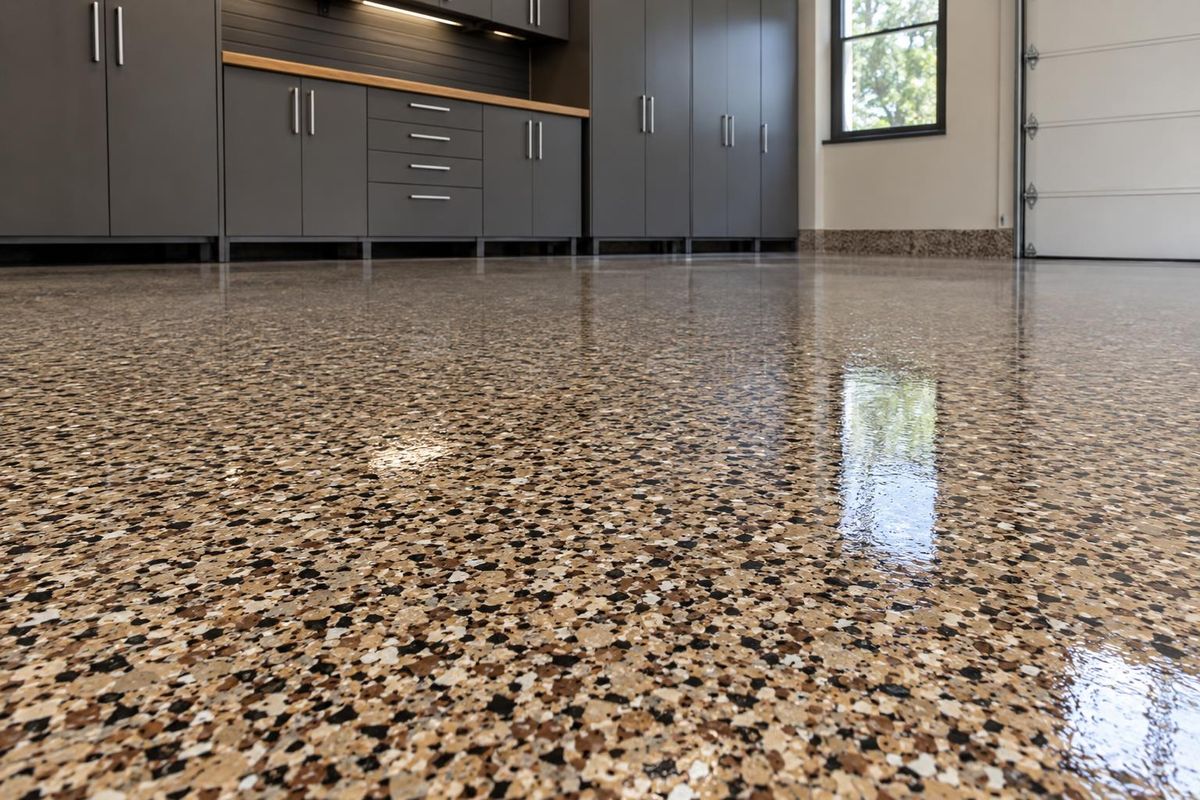
Both can be installed with decorative flake for texture and color.
The hybrid approach
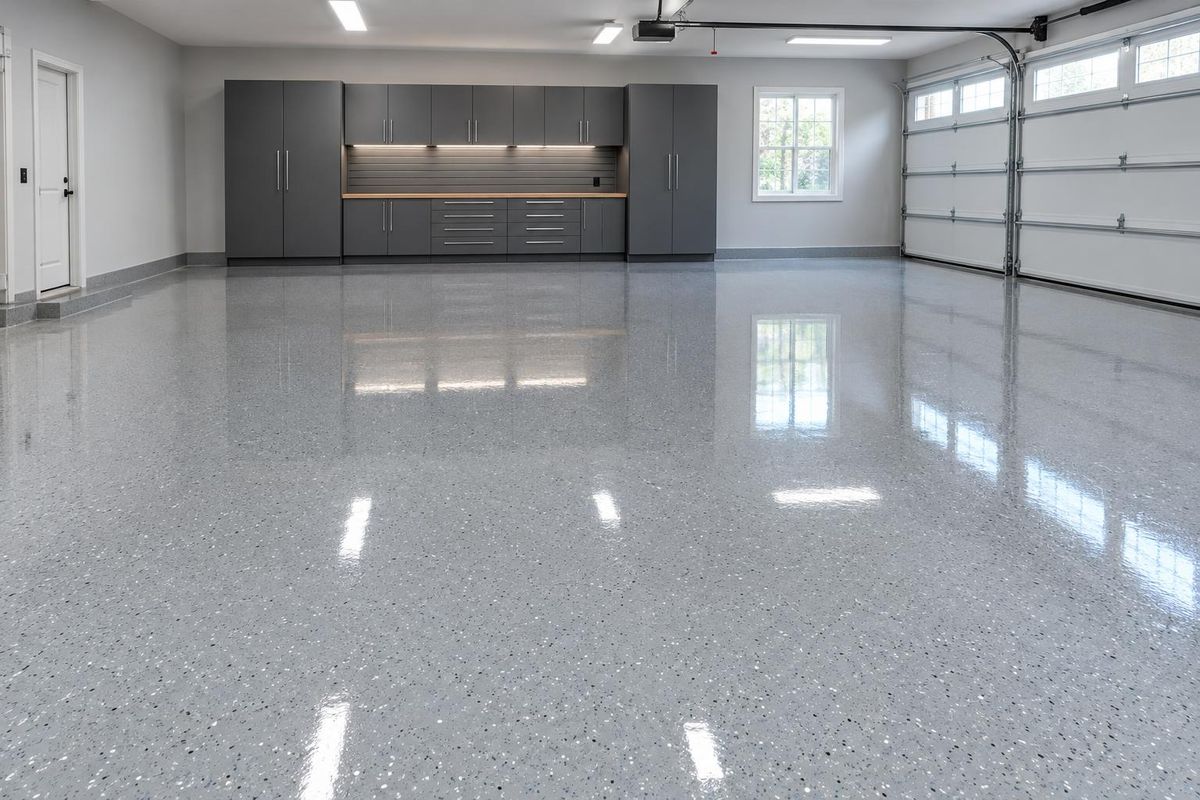
Many installers use an epoxy base coat for fill and bond, then flake and a polyaspartic topcoat for protection and gloss.
A good installer explains the system and why each layer is there.
Quick answers
Is polyaspartic better than epoxy?
Neither is best for every garage. Polyaspartic cures faster and resists UV, while epoxy builds thickness. The right system depends on the slab and use.
Can I put polyaspartic over epoxy?
Yes, as a topcoat when the epoxy is properly prepared.
Which is easier to clean?
Both clean easily when sealed.